Easy Granny Crochet Christmas Baubles Free Pattern
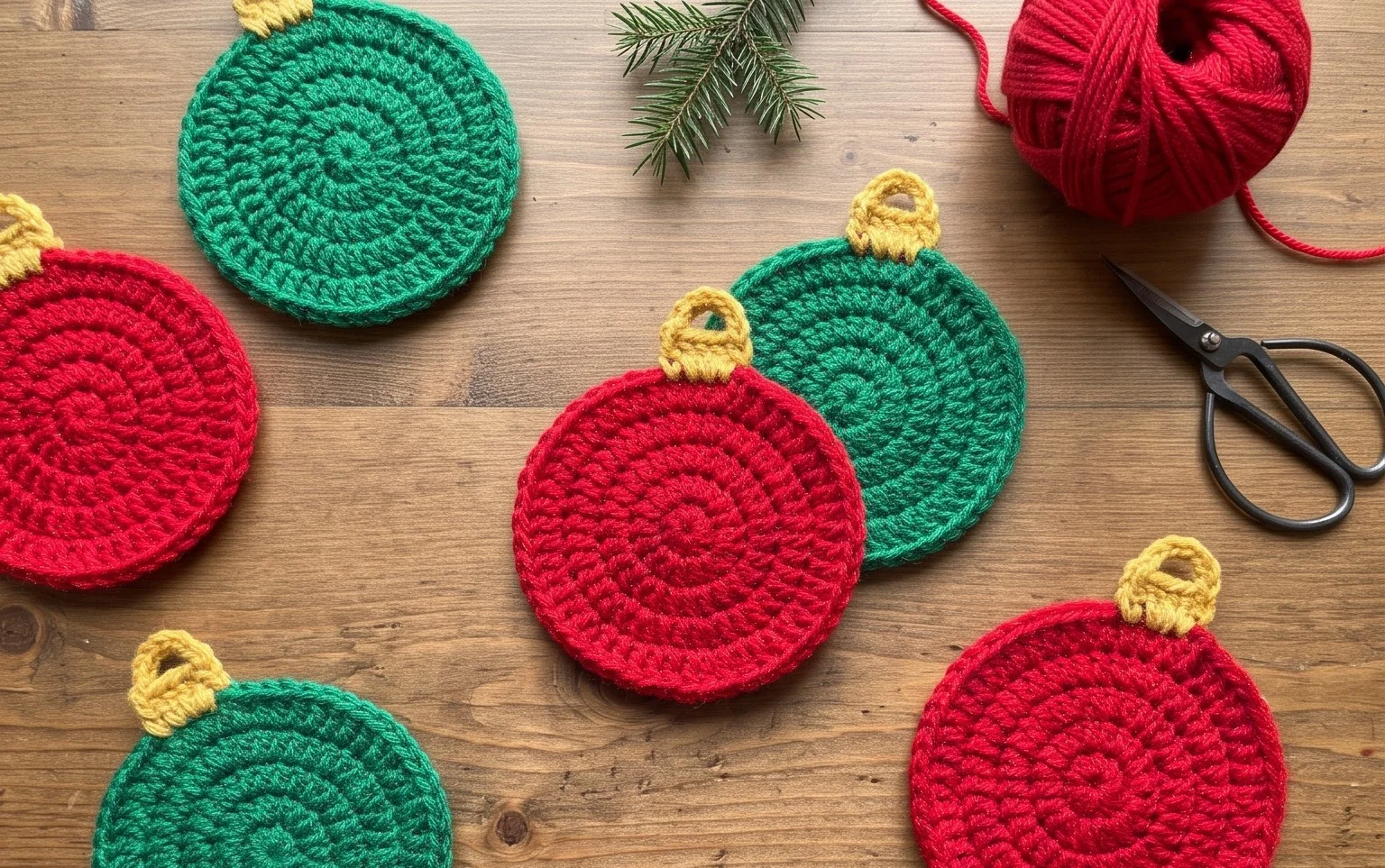
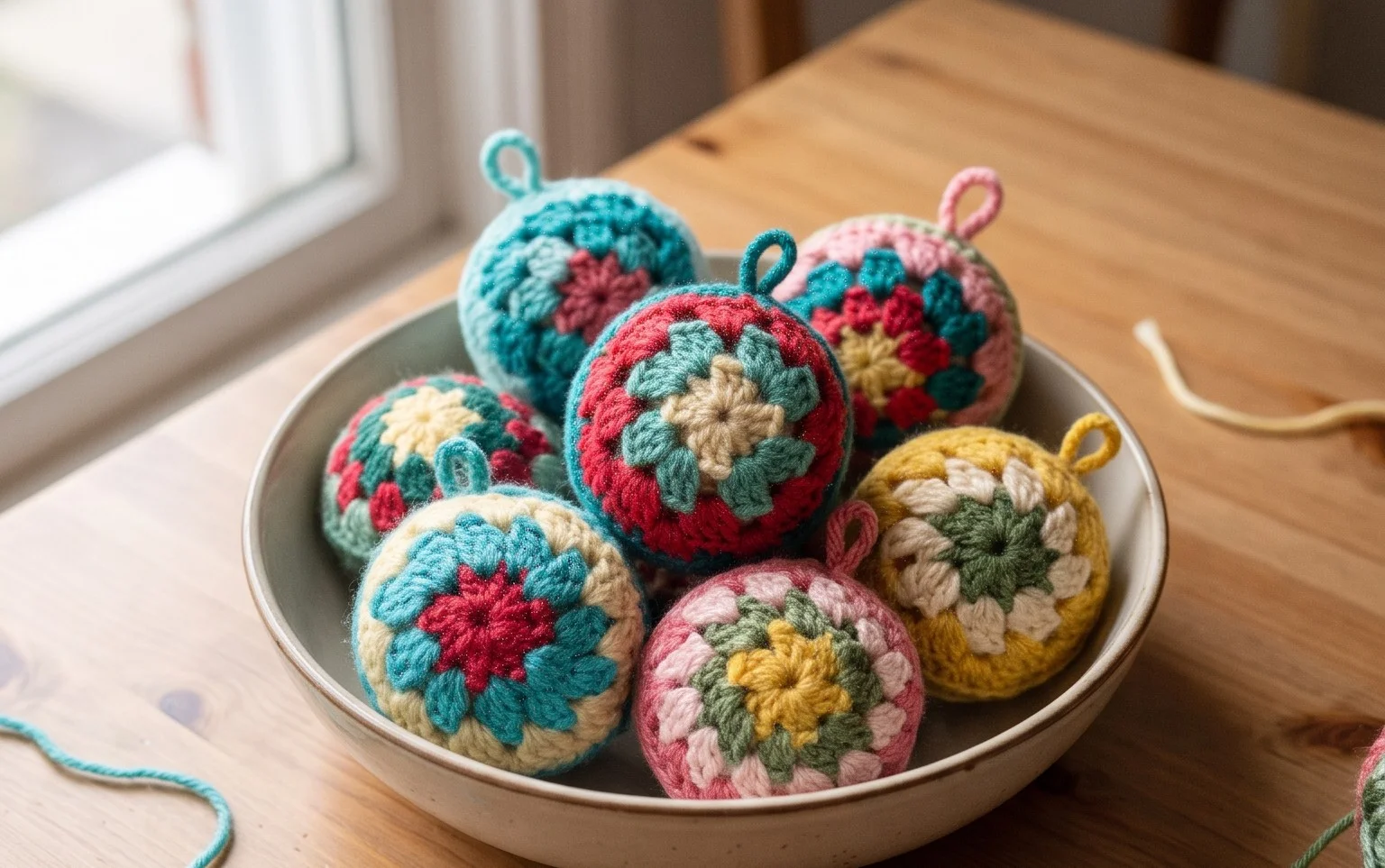
Small granny clusters give these Christmas baubles a cheerful, lacy texture that stands out against evergreen branches. The finished ornaments are light to hang, easy to make in a few colors, and a thoughtful handmade gift for anyone who enjoys decorating for the holidays. Beginners can practice working granny-style clusters and keeping their stitches even, while experienced crocheters can use up small amounts of leftover yarn. This project is satisfying because the fabric grows quickly, and each completed motif adds another bit of color and texture to the tree. I’ll walk you through the stitches and assembly so you can create a neat cover for a bauble and finish it with a hanging loop. Choose classic red and green, or match the yarn to your own holiday decorations.
Why You’ll Love This Pattern
A firm cotton fabric and a simple square shape make this crochet dishcloth useful at the sink and easy to finish in an afternoon. The pattern uses single crochet throughout, so you can focus on keeping the edges straight rather than learning several stitches. Its plain texture also makes it a practical first project for using a new hook or practicing even tension.
One ball of worsted cotton is usually enough, and leftovers can work if you have at least 85 yards in a similar thickness. Make a set in one color for a coordinated kitchen, or use separate colors for different household tasks. The finished cloth is washable and reusable, and its straightforward shape makes it a handy handmade gift.
I made this as my first dishcloth and liked how easy it was to count each row. The cotton feels sturdy, and the edges stayed neat after washing.
— Mara, beginner crocheter
Pattern Overview & Skill Level
- Skill Level: Beginner. You need to chain, single crochet, turn, and count stitches.
- Approximate Time: 2–3 hours, depending on your pace and how often you check your stitch count.
- Construction: A flat square worked back and forth in rows, beginning with a foundation chain and finished with a woven-in yarn tail.
- Finished Dimensions & Sizing: About 7.5 × 7.5 inches (19 × 19 cm) when made to gauge. Small differences in tension may change the final measurements.
Materials & Supplies Needed
- Yarn: About 85–100 yards (78–91 m) of worsted-weight cotton yarn, category 4. Choose one color, or join a new color at the start of a row if using scraps.
- Hook: 5.0 mm / H-8 crochet hook. If your fabric is very loose, try a 4.5 mm hook; if it feels stiff, try a 5.5 mm hook and check the gauge again.
- Notions: Tapestry needle for weaving in ends, scissors, and a ruler or tape measure. A stitch marker is optional but can help identify the first or last stitch.
- Substitutions: Use a smooth, absorbent cotton or cotton-blend yarn of similar thickness. Linen or a cotton-linen blend can feel firmer and may soften with use. Acrylic is washable but absorbs water differently, so it is less suitable for wiping dishes. A thicker yarn or larger hook makes a larger, looser cloth and uses more yarn; a thinner yarn makes a smaller, denser cloth.
Gauge: 16 single crochet stitches and 18 rows measure 4 inches (10 cm) in the pattern fabric. Make a small swatch before starting. Change hook size if needed to reach the gauge; the finished size depends on matching both the stitch width and row height.
Stitch Guide & Abbreviations (US Terms)
- ch: Chain. Yarn over and pull through the loop on the hook.
- sc: Single crochet. Insert the hook into the stitch, yarn over and pull up a loop, yarn over and pull through both loops on the hook.
- st: Stitch.
- sts: Stitches.
The turning chain does not count as a stitch. Work the first single crochet into the first stitch of each row, and work the last single crochet into the final stitch. This keeps the stitch count at 30 and helps prevent the sides from slanting.
Step-by-Step Pattern Instructions
Dishcloth
- Foundation: Ch 31. The chain forms the lower edge of the cloth.
- Row 1: Sc in the second ch from the hook and in each ch across. Turn. (30 sts)
- Rows 2–5: Ch 1, sc in each st across, turn. (30 sts each row)
- Rows 6–10: Repeat Row 2. (30 sts each row)
- Rows 11–15: Repeat Row 2. (30 sts each row)
- Rows 16–20: Repeat Row 2. (30 sts each row)
- Rows 21–25: Repeat Row 2. (30 sts each row)
- Rows 26–30: Repeat Row 2. (30 sts each row)
After Row 30, check that the piece measures close to 7.5 inches square. If it is noticeably shorter or taller, add or remove rows to match the width, keeping in mind that this changes the finished size. Fasten off, leaving a tail of about 6 inches. Thread the tail onto a tapestry needle and weave it through several stitches on the wrong side, then change direction and weave through a few more stitches so the end is secure. Weave in the foundation tail the same way.
Care & Washing Instructions
- For cotton yarn, machine-wash with like colors in warm water, up to 40°C (104°F), or follow the yarn label.
- Reshape the cloth and dry it flat; avoid high dryer heat, which can shrink cotton.
- After washing, smooth the edges and corners by hand while damp. Follow the yarn label if you use a different fiber.
Pro Tips & Common Mistakes to Avoid
- Keep your tension steady, especially in the foundation chain. If it is much tighter than the following rows, the lower edge may pull inward; loosen the chain or use a slightly larger hook just for it.
- Count the stitches at the end of every row. A stitch marker in the first or last stitch can help, since it is easy to miss an edge stitch when turning.
- Weave each tail through the back of several stitches, then change direction before trimming. Cutting a tail immediately after one pass can let it work loose during washing.
- To make the cloth wider, add chains to the foundation and work the same number of single crochets across; to make it longer, add rows. Both changes use more yarn, and extra width or length changes the finished dimensions.
Frequently Asked Questions
Can I use a different yarn fiber?
Yes. Cotton is a good choice because it absorbs water and tolerates frequent washing. A cotton blend can also work, but check its care label. Acrylic is less absorbent, and wool may shrink or felt with hot water and agitation.
How can I make the dishcloth smaller or larger?
For a narrower or wider cloth, change the foundation chain, then single crochet into every chain except the turning chain. For a shorter or longer cloth, work fewer or more rows. Measure as you go, and allow extra yarn for a larger piece.
Is this pattern suitable for a first crochet project?
Yes. It uses only chains and single crochet stitches, with no shaping or joining. Count each row and check that you have 30 stitches after Row 1; repeating that count helps keep the sides straight.
Can I sell dishcloths made from this pattern?
Check the designer’s terms before selling finished items, and follow any requirements for credit. If you sell at a market, label the fiber and give customers the care instructions from the yarn label.
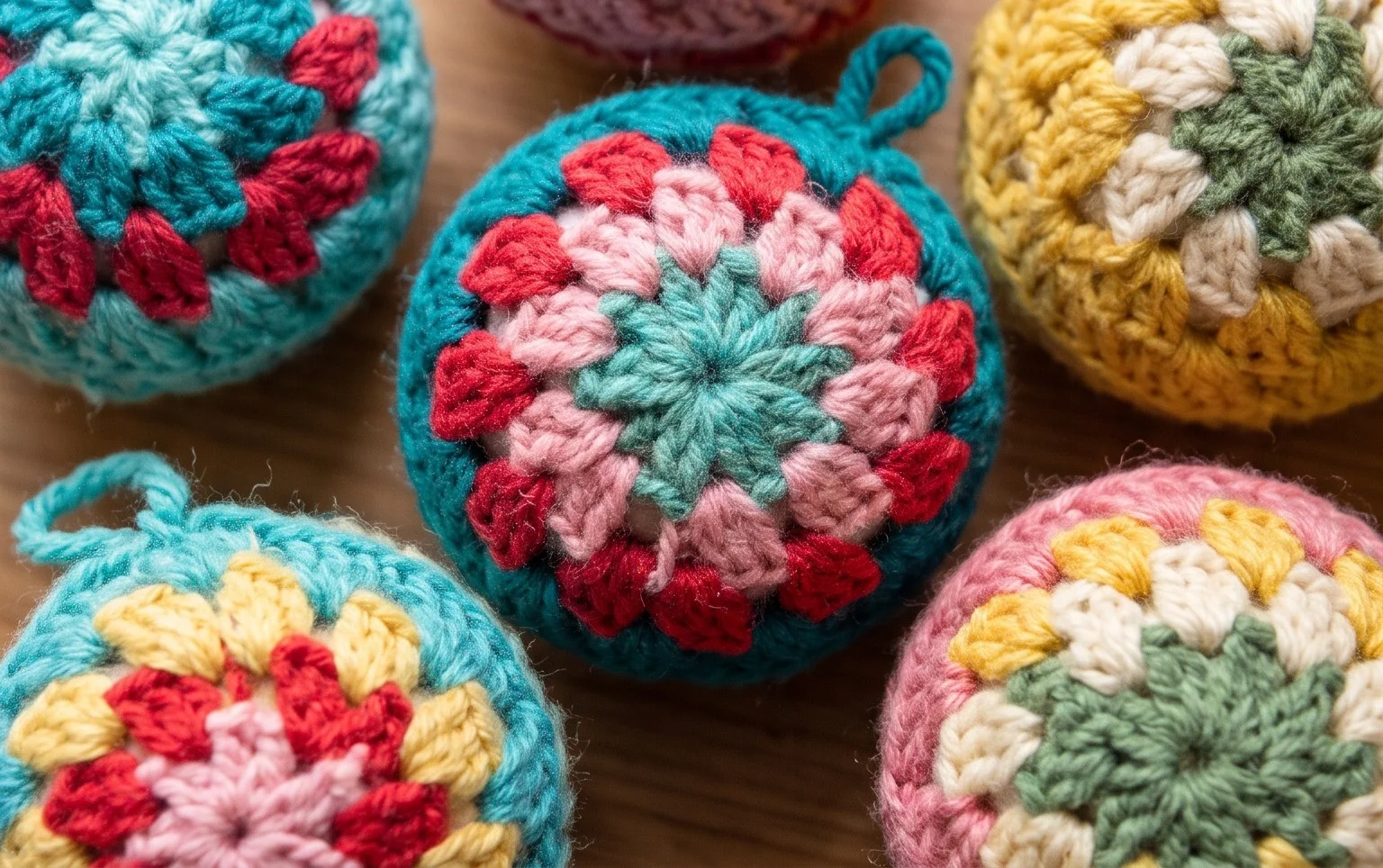
Once the last granny cluster is joined and the hanging loop is secure, you’ll have a handmade ornament with a soft, lacy texture and plenty of color for the tree. For a simple variation, use two shades of yarn and alternate them between motifs to make a striped effect. Check that the cover sits snugly around the bauble before trimming and weaving in the ends, so it stays in place when hung. If you make a set, take a photo of them on your tree and share it on Pinterest or your favorite social platform. I’d love to see the colors you chose. When you’re ready for another small project, explore the other free crochet patterns on the blog.