Easy Gingerbread Man Candy Cane Holder Crochet Pattern
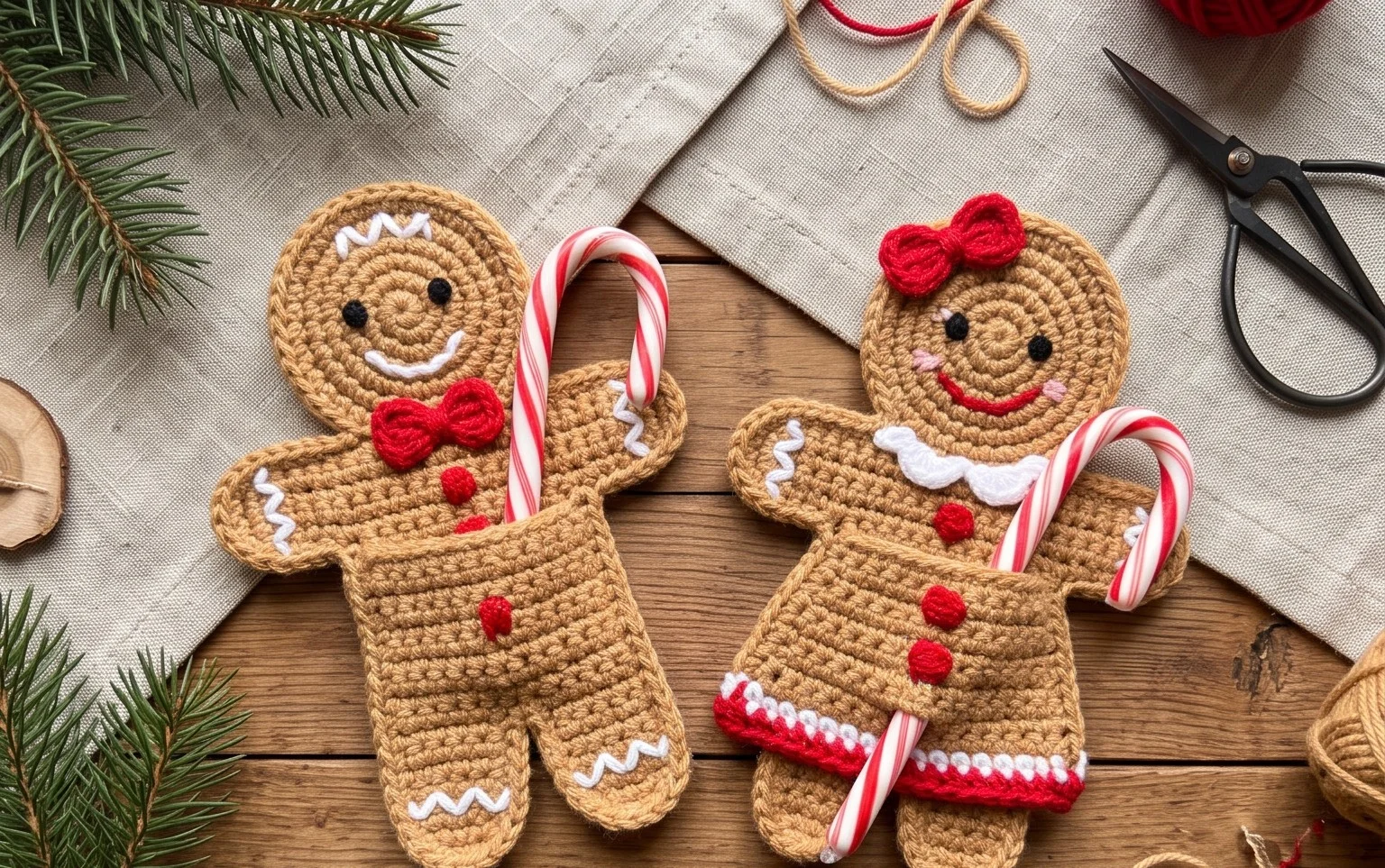
Soft yarn, a little stitched smile, and a candy cane tucked through the middle give this gingerbread man ornament its cheerful holiday look. The finished holder is small and lightly textured, with a cozy handmade feel that works on a Christmas tree or tied onto a gift. It suits newer crocheters who want to practice steady stitches, as well as gift makers looking for a quick project with a useful detail. The shape comes together with simple crochet techniques, and adding the face and decorations gives you room to make each little gingerbread person your own. You’ll learn how the pieces are formed and joined, along with tips for keeping the edges neat and making a secure opening for the candy cane. It’s a satisfying project to finish in an evening and bring out each December.
Why You’ll Love This Pattern
A firm cotton dishcloth is useful at the sink, easy to wash, and small enough to finish in an afternoon. This beginner-friendly pattern uses single crochet stitches in straight rows, so you can focus on keeping the edges even rather than learning a complicated repeat. The dense fabric has a gently textured surface that works well for wiping counters and washing dishes.
One ball of worsted cotton is usually enough, and leftover cotton can work if you have the required yardage. The simple square also makes a practical handmade gift. Wash it before use to soften the cotton and help the stitches settle.
The row repeat was easy to remember, and the cotton made a sturdy cloth that washed well without losing its shape.
— Sample tester, cotton-yarn maker
Pattern Overview & Skill Level
- Skill Level: Beginner. You need to chain and work single crochet stitches in rows.
- Approximate Time: 2–3 hours, depending on your pace and whether you stop to check your edges.
- Construction: A flat square worked back and forth in single crochet rows, beginning with a foundation chain. There is no separate border or seaming.
- Finished Dimensions & Sizing: About 7 x 7 in (18 x 18 cm) after washing and drying flat. The finished size can vary with yarn and tension.
Materials & Supplies Needed
- Yarn: About 75 yd (69 m) of worsted-weight cotton yarn, approximately 35–45 g. Use one color, or join a new color at the start of a row.
- Hook: 5.0 mm / H-8 crochet hook. Change hook size if needed to meet gauge.
- Notions: Tapestry needle for weaving in the yarn tails, scissors, and a ruler or tape measure. A stitch marker can help identify the first stitch in each row.
- Substitutions: Choose a smooth, washable plant-fiber yarn such as a cotton-linen blend. Acrylic is less absorbent and may feel different at the sink. A thicker yarn or larger hook makes a larger, looser cloth and uses more yarn; a finer yarn or smaller hook makes a smaller, denser cloth.
Gauge: 18 single crochet stitches and 18 rows measure about 4 in (10 cm) in a square. Make a small swatch if finished size matters. If you have more stitches per 4 in, try a larger hook; if you have fewer, try a smaller hook.
Stitch Guide & Abbreviations (US Terms)
- ch: Chain. Yarn over and pull through the loop on the hook.
- sc: Single crochet. Insert the hook in the stitch, yarn over and pull up a loop, yarn over and pull through both loops on the hook.
- st / sts: Stitch / stitches.
Work each single crochet under both top loops of the stitch unless the instructions say otherwise. The turning chain does not count as a stitch in this pattern.
Step-by-Step Pattern Instructions
Dishcloth
- Row 1: Ch 33. Sc in the second ch from the hook and in each ch across. Turn. (32 sts)
- Row 2: Ch 1, sc in each st across, including the last stitch. Turn. (32 sts)
- Rows 3–32: Repeat Row 2. Each row has 32 sc. At the end of Row 32, fasten off, leaving a tail of about 6 in (15 cm). (32 sts each row)
Count your stitches as you work. The first stitch of a row goes into the first single crochet, not into the turning chain. Working into the chain by mistake can add a stitch and make the cloth widen. Missing the final stitch can make it narrow.
Finishing
Thread the yarn tail onto a tapestry needle. Weave it through several stitches on the wrong side, change direction, and weave through a few more stitches so it stays secure after washing. Trim the remaining tail close to the fabric without cutting a stitch. Repeat with the starting tail. Wash the cloth and lay it flat to dry, easing the corners into a square shape.
Care & Washing Instructions
- Wash cotton in a machine on a warm cycle, up to 40°C (104°F), or hand-wash in warm water with mild detergent.
- Dry flat to help the cloth keep its square shape; reshape the edges while damp.
- Block lightly by pinning the damp cloth to its finished measurements if the edges curl; follow the yarn label if its care directions differ.
Pro Tips & Common Mistakes to Avoid
- Keep your tension even: Cotton has less stretch than wool, so very tight stitches can make the cloth stiff. If the hook feels hard to insert, loosen your grip or try a larger hook.
- Mark the first stitch: Put a marker in the first sc of each row, especially while learning. This makes it easier to find the last stitch when you reach the end of the next row.
- Hide tails securely: Weave each end through the back of several stitches, then change direction. A short tail woven in only one direction may work loose during repeated washing.
- Adjust size with the starting chain: Add or remove chains to change the width, then work the same number of rows as stitches for a roughly square cloth. Each extra stitch adds a little width and uses more yarn; a larger square also takes longer to dry.
Frequently Asked Questions
Can I use a different yarn fiber?
Yes. A cotton-linen blend is a suitable option if it is washable. Wool can felt with hot water and friction, while acrylic tends to absorb less water than cotton. Check the substitute yarn’s care label and make a swatch because a different fiber can change the cloth’s size and feel.
How can I make the dishcloth larger or smaller?
For a wider cloth, add chains to the foundation, keeping the total number of stitches even with the intended width. For a narrower cloth, remove chains. Add or remove rows to adjust the height. A larger cloth requires more yarn and may take longer to dry.
Is this pattern suitable for a first crochet project?
Yes. It uses only chain stitches and single crochet in straight rows. The main skill to practice is finding the first and last stitch consistently. If your edges slope, count 32 stitches at the end of every row before turning.
May I sell dishcloths made from this pattern?
You can sell finished items if the pattern designer’s terms allow it. This guide does not state separate licensing terms, so check the source or designer’s current conditions before listing or selling finished cloths. Do not claim the pattern itself as your own.
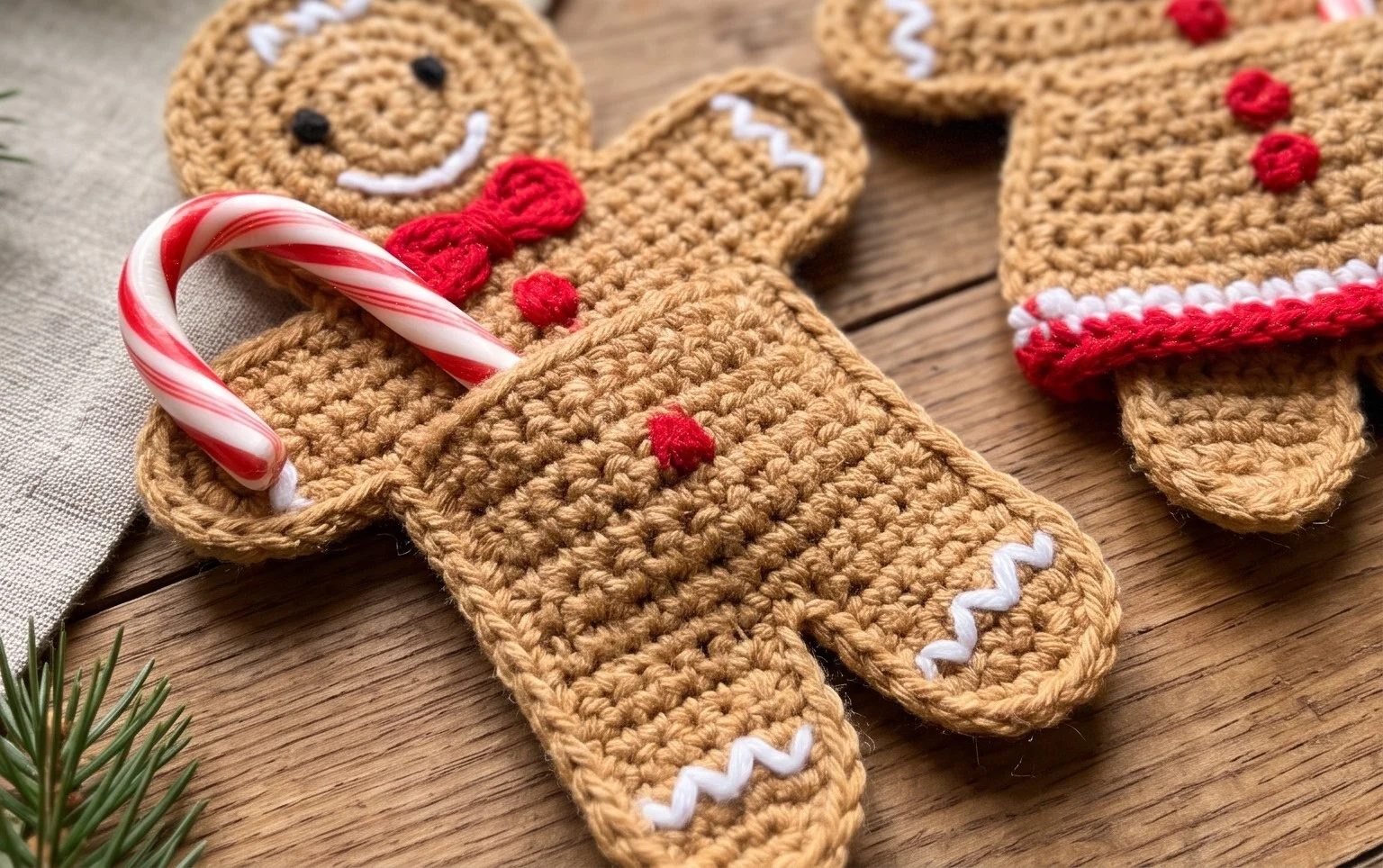
Your little gingerbread holder is ready to bring a candy cane to the tree, a place setting, or the top of a wrapped present. The small scale makes it quick to finish, and stitched facial details give it a friendly look without needing much extra yarn. For a simple variation, use white yarn for the icing details or choose a different color for the scarf to match your holiday decorations. If you make one, share a photo on Pinterest or your favorite social media account; it’s fun to see the different expressions and colors. Then explore more free crochet patterns on the blog for another handmade project to work on this season.