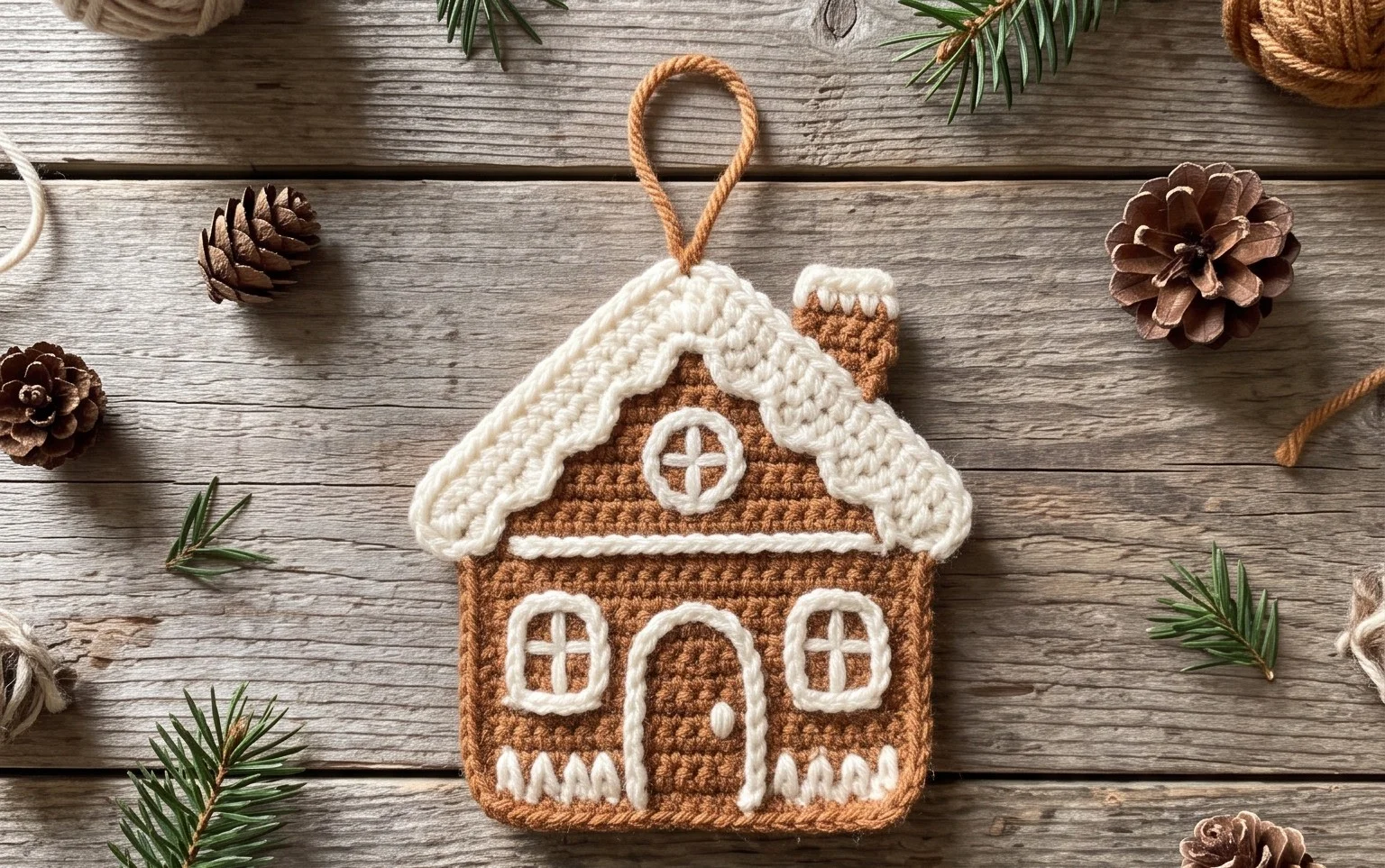
Easy Gingerbread House Ornament: Free Crochet Pattern
A small, spice-colored cottage hanging from a pine branch brings a sense of warmth to any room during the winter months. This project results in a stiff, structured ornament that stands up well to handling and looks charming tied to a gift or tucked into a stocking. Beginners will find the process straightforward because it relies on working flat panels that are later joined together with basic whip stitches. You will learn to manage tension to ensure your walls stay straight and your roof lines remain crisp, creating a tiny heirloom you can display for many years to come.
Why Crocheters Love It
This classic crochet dishcloth pattern uses the moss stitch to create a dense, textured fabric that is perfect for scrubbing kitchen surfaces. The pattern is designed for efficiency, meaning you can whip one up in about an hour while watching your favorite show. Because it uses simple chain and single crochet stitches, it is an excellent project for practicing consistent tension without complex counting. Additionally, using cotton yarn makes the finished cloth durable enough to withstand daily use and repeated washings.
I started making these as wedding gifts because they work up so fast and look so clean in any color. The texture really holds onto soap well while I am washing dishes.
— Sarah, home crafter
Pattern Overview & Skill Level
- Skill Level: Beginner
- Approximate Time: 45–60 minutes per cloth
- Construction: Worked in flat rows starting from a base foundation chain
- Finished Dimensions: Approximately 8 inches by 8 inches square
Materials & Supplies Needed
- Yarn: Worsted weight #4, 100% cotton, approximately 60 yards per cloth.
- Hook Size: 5.0 mm / H-8.
- Notions: Tapestry needle for weaving in ends, scissors, and an optional stitch marker.
- Safe yarn substitutions: You may use a cotton-acrylic blend, though pure cotton is more absorbent. Using a lighter weight yarn like DK will result in a smaller cloth unless you increase your foundation chain.
Stitch Guide & Abbreviations (US Terms)
- ch = chain
- st = stitch
- sc = single crochet
- sk = skip
- sl st = slip stitch
- Moss Stitch: A pattern formed by alternating single crochet stitches and chain spaces. You work single crochet stitches into the chain spaces of the previous row.
Step-by-Step Pattern Instructions
Dishcloth Body
- Row 1: Ch 32. Sc in 4th ch from hook, *ch 1, sk 1 ch, sc in next ch; repeat from * across. Turn. (16 sc, 15 ch-spaces)
- Row 2: Ch 2, sc in first ch-1 space, *ch 1, sk 1 sc, sc in next ch-1 space; repeat from * across, ending with a sc in the turning chain space. Turn. (16 sc, 15 ch-spaces)
- Rows 3–30: Repeat Row 2 until the piece measures 8 inches long or reaches your desired square size.
Finishing
Once you reach the desired length, fasten off by cutting the yarn, leaving a 6-inch tail. Pull the tail through the final loop to secure it. Thread your tapestry needle with the tail and weave it back and forth through the stitches on the back side of the cloth to hide it. Repeat this process for the starting tail at the base of the cloth.
Care & Washing Instructions
- Machine wash your cotton dishcloths in warm water on a gentle cycle to prevent fraying.
- Lay the cloths flat on a towel to air dry, which helps maintain the square shape and prevents shrinking.
- If the corners begin to curl after washing, dampen the cloth slightly and pin it flat on a blocking mat until it dries completely.
Pro Tips & Common Mistakes to Avoid
- Consistent Tension: Because the moss stitch relies on chains, ensure your chains are not significantly looser or tighter than your single crochet stitches. If you struggle with this, try wrapping the yarn around your index finger twice to maintain a steady feed.
- Stitch Counting: Place a stitch marker in the first chain-space of every row to make it easier to see exactly where you need to work your final stitch. This prevents the edges from accidentally slanting inward.
- Weaving Ends: To ensure your ends do not unravel during heavy scrubbing, weave your tail in one direction for three stitches, then double back over those same stitches in the opposite direction.
- Size Adjustments: If you prefer a larger cloth, increase your starting chain to any odd number. Note that adding width will increase the total yardage needed beyond 60 yards.
Frequently Asked Questions
Can I use a different yarn weight for this pattern?
Yes, you can use a lighter or heavier weight yarn. However, remember that your hook size must be adjusted accordingly to maintain a fabric that is tight enough to be useful as a dishcloth.
Is this project suitable for a complete beginner?
This is a perfect beginner project. It teaches you how to maintain consistent gauge and how to identify chain spaces, which are fundamental skills for more advanced patterns.
How do I keep the edges straight?
The most common mistake is skipping the turning chain or working into the wrong loop at the end of the row. Counting your stitches at the end of every row will keep your edges perfectly straight.
Can I sell the dishcloths I make from this pattern?
You are welcome to sell finished items created from this pattern. I only ask that you credit the original designer when listing the items for sale in your own shop or online store.
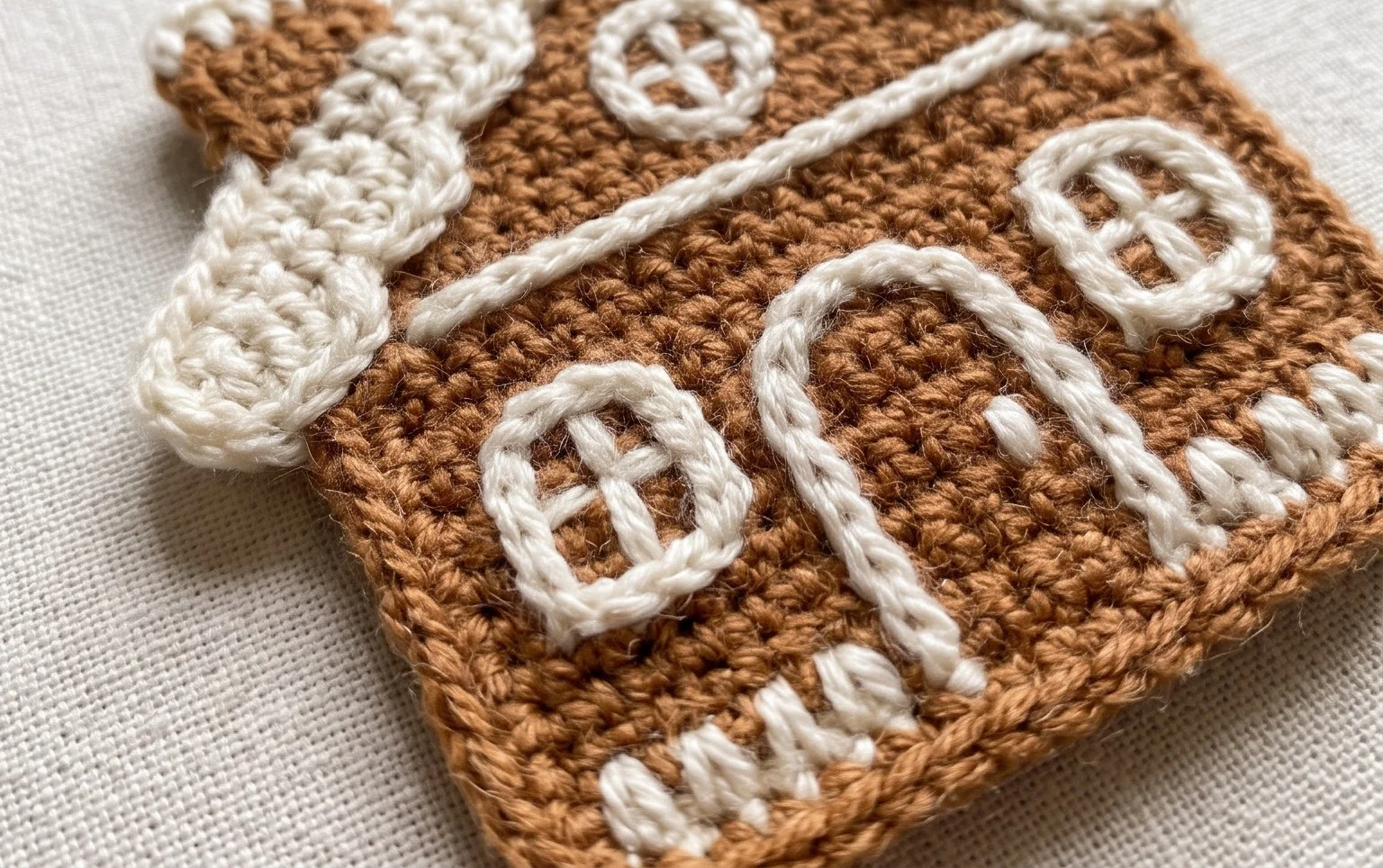
Your new gingerbread house ornament adds a sweet, handmade touch to your holiday decorations that simply cannot be bought in a store. You might consider adding a bit of white embroidery floss along the roof edges to mimic snowy icing or switching to a dark chocolate brown yarn for a richer, more realistic look. Please share a photo of your finished house on social media so others can see your color choices. Browse the rest of the blog for more free patterns to fill your tree with custom yarn creations.