Beginner Christmas Paw Stocking Crochet Free Pattern
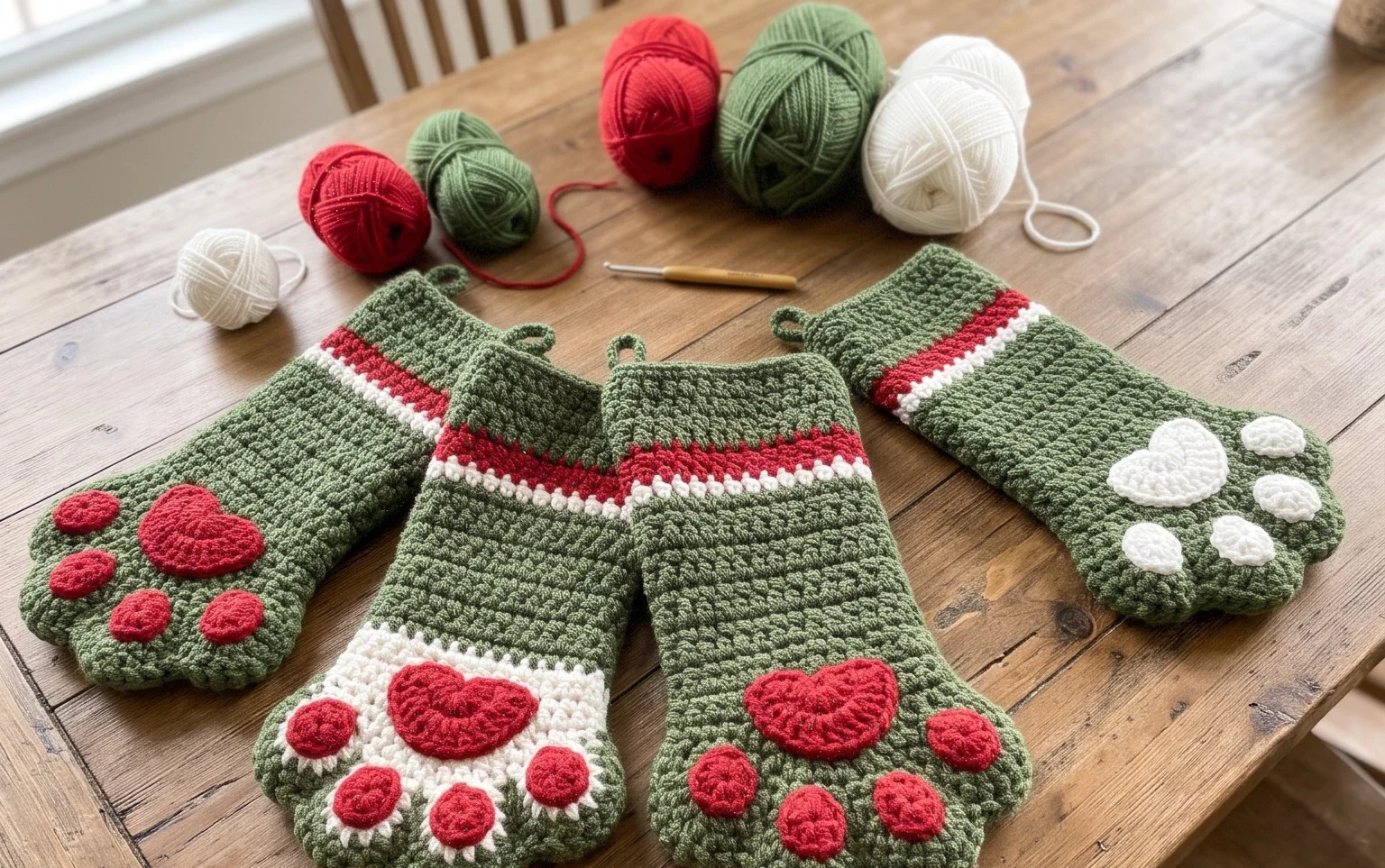
A soft paw-shaped stocking with a rounded toe and little pad details brings a playful touch to a Christmas mantel, pet corner, or handmade gift pile. This festive crochet project suits beginners who are comfortable with basic stitches, and it gives gift makers a personal way to celebrate a dog or cat. The finished fabric feels cozy and holds its shape well, while contrasting paw pads make the design easy to recognize from across the room. You’ll learn how simple crochet stitches and careful shaping can create the stocking silhouette, along with ways to keep the edges neat as you work. Choose traditional red and white, or pick colors that match your pet’s personality. The small decorative details make each stocking feel special without requiring complicated techniques, and the project is satisfying to work on during a quiet evening before the holidays.
Why You’ll Love This Pattern
A cotton crochet dishcloth is a useful first project: it is worked flat in single crochet, so you can practice keeping even edges without shaping or joining rounds. The compact rectangle uses about 90 yards of worsted-weight cotton, making it a practical choice for a small leftover ball. Its dense fabric handles everyday wiping, and the finished cloth can be washed and used again.
The stitch pattern is easy to pause and pick up later. A stitch marker at the beginning of each row is optional, but counting the stitches helps keep the sides straight. Choose a smooth, washable cotton yarn so the cloth absorbs water and stands up to regular laundering.
I made this in an afternoon and liked how easy it was to keep the sides even. The cotton makes a sturdy cloth that washes well.
— Claire, home crocheter
Pattern Overview & Skill Level
- Skill Level: Beginner. You need to chain and work single crochet stitches.
- Approximate Time: 2–3 hours, depending on your pace and how often you stop to count.
- Construction: The dishcloth is worked flat in turned rows, then finished with a yarn tail woven through the edge stitches.
- Finished Dimensions & Sizing: About 22 × 22 cm (8.75 × 8.75 in) after washing and drying flat. The exact size depends on your tension.
Materials & Supplies Needed
- Yarn: About 90 yd (82 m) of worsted-weight (#4) 100% cotton yarn in one color. A solid shade makes it easier to see each stitch while learning.
- Hook Size: 5.0 mm / H-8 crochet hook.
- Notions: Tapestry needle for weaving in the ends, scissors, and an optional stitch marker for the first stitch of each row.
- Substitutions: A different smooth, machine-washable cotton yarn is suitable. Keep to a similar worsted thickness for a similar size; thinner or thicker yarn changes the dimensions and may change the yardage. Avoid acrylic if you want a cloth with cotton’s absorbency and heat tolerance.
Gauge: 14 single crochet stitches and 20 rows measure 10 cm (4 in) using the stated yarn and hook. Gauge is less important than for a fitted garment, but matching it helps produce the listed dimensions. If your swatch is wider than 10 cm, try a smaller hook; if it is narrower, try a larger one.
Stitch Guide & Abbreviations (US Terms)
- ch: Chain.
- sc: Single crochet. Insert the hook into the stitch, yarn over and pull up a loop, yarn over and pull through both loops.
- st(s): Stitch(es).
- rep: Repeat.
- RS: Right side, the face you choose to show.
- WS: Wrong side, the opposite face.
- turn: Rotate the work to begin the next row. The turning chain does not count as a stitch in this pattern.
No special stitch is required. Work each single crochet into the top loops of the stitch from the previous row, rather than into the turning chain.
Step-by-Step Pattern Instructions
Dishcloth
With the 5.0 mm hook, make a foundation chain that is loose enough to stretch gently without becoming wavy. The turning chain at the end of each row is included in the instructions but never counts as a stitch.
- Row 1: Sc in the second ch from the hook and in each ch across. Turn. (31 sts)
- Rows 2–44: Ch 1, sc in each st across. Turn. (31 sts each row)
After Row 44, fasten off, leaving a tail about 15 cm (6 in) long. Pull the tail through the final loop to secure it. Thread the tail onto a tapestry needle and weave it back and forth through several stitches on the edge. Change direction once so the end is held securely, then trim close to the fabric without cutting the stitches. Repeat with the starting tail.
Lay the cloth flat and check that the edges are even. If your tension is consistent, the finished piece should be close to square. Wash it before first use according to the yarn label; cotton may relax slightly after washing.
Care & Washing Instructions
- For cotton yarn, machine-wash with like colors in warm water, up to 40°C (104°F), unless the yarn label gives different directions.
- Dry flat or tumble-dry on low heat; reshape the corners while the cloth is damp.
- Block lightly by smoothing the damp cloth to its square shape; do not stretch the edges hard or the fabric may become uneven.
Pro Tips & Common Mistakes to Avoid
- Keep the foundation chain relaxed. A tight chain can pull the bottom edge inward even when the rows above it are even. If needed, use a hook one size larger for the chain only.
- Count 31 stitches at the end of every row. Place a marker in the first stitch after turning if you tend to skip it; the last stitch belongs in the final single crochet, not the turning chain.
- When weaving in ends, pass the needle through the backs of several stitches and change direction. Avoid pulling the yarn tight, which can pucker the edge or show on the front.
- To change the size, make a longer or shorter foundation chain and work more or fewer rows. Each added chain gives roughly 0.7 cm of width at the stated gauge; extra rows use more yarn and increase the length.
Frequently Asked Questions
Can I use a different cotton yarn?
Yes. Choose smooth, washable cotton in a similar worsted thickness. A different yarn may produce a slightly larger or smaller cloth, so check the width after the first several rows and adjust the hook if needed.
How can I make the dishcloth larger or smaller?
Change the number of foundation chains to adjust the width, then add or remove rows to adjust the length. The pattern’s 31 stitches and 44 rows make a roughly square cloth at the stated gauge. Larger sizes need more yarn.
Is this pattern suitable for a first crochet project?
Yes, if you can make a chain and single crochet. The main challenge is keeping 31 stitches in every row. Count regularly, and undo a row if the edge loses a stitch rather than carrying the mistake forward.
May I sell dishcloths made from this pattern?
Check the designer’s terms before selling finished items, and follow any requirements for credit or sales listings. Use your own photographs and product descriptions, and do not claim the pattern itself as your work.
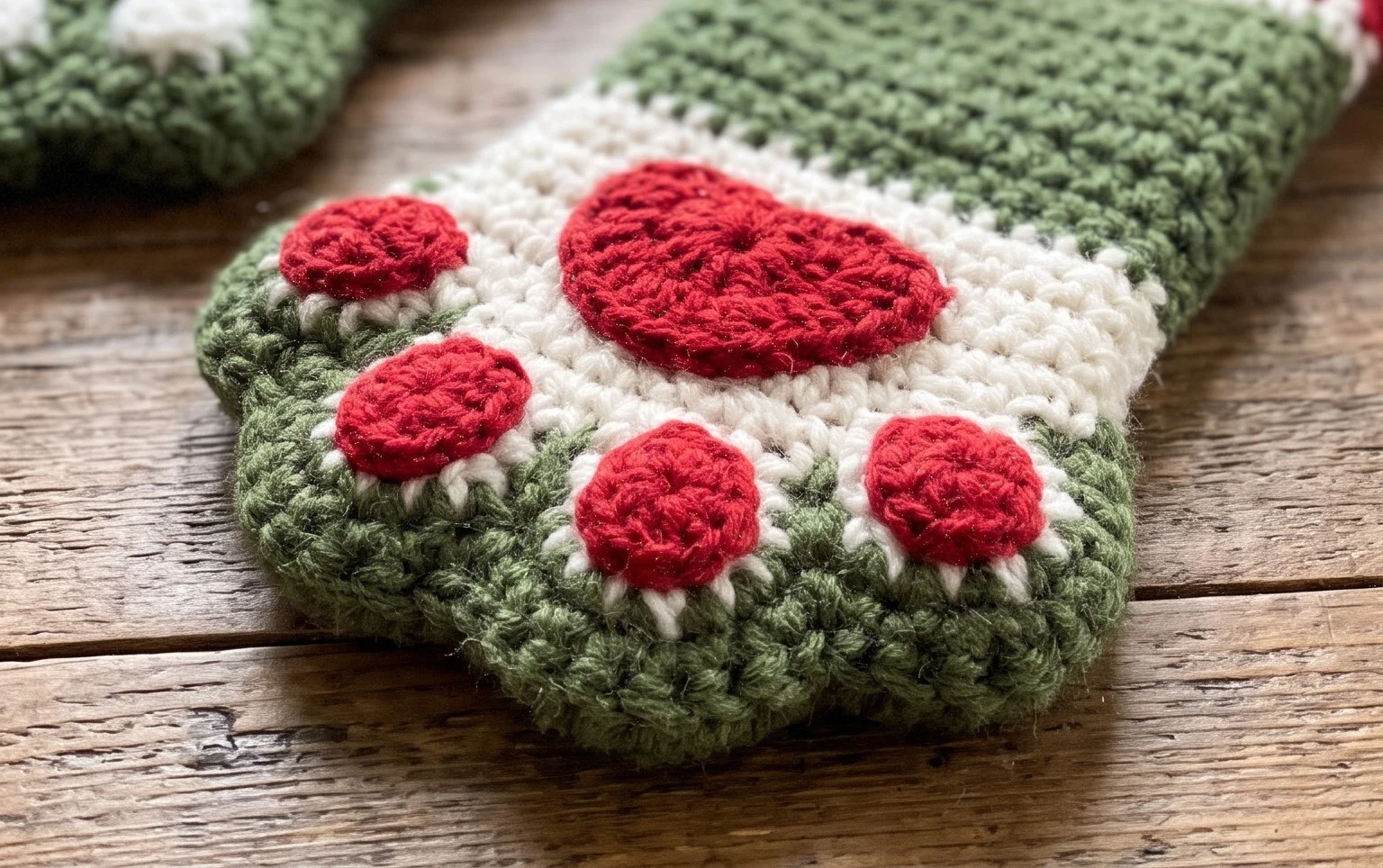
A finished paw stocking adds a cheerful handmade touch to holiday decorating, and its little pads make it a sweet keepsake for a pet-loving home. For a simple variation, use your pet’s coat colors for the stocking and choose a contrasting shade for the paw details. You can also adjust the size by changing your yarn weight and hook, while keeping the stitches firm enough for the stocking to hold its shape. Share a photo of your finished work on Pinterest or your favorite social media platform so other makers can see your color choices. When you’re ready for another seasonal project, browse the blog for more free crochet patterns and ideas to make by hand.